

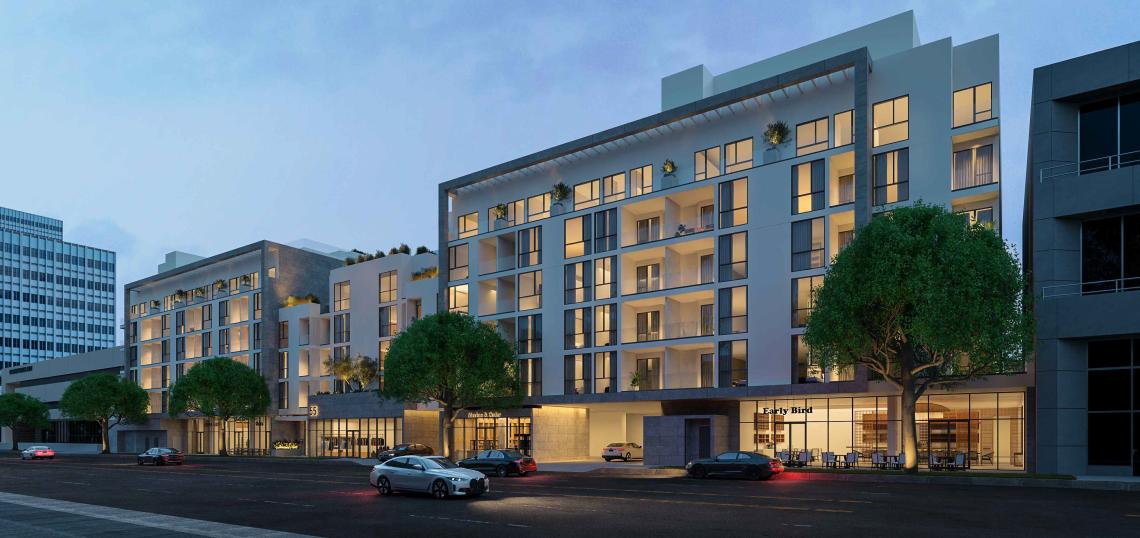
Marcus & Millichap Capital has announced $85 million in construction financing for a new mixed-use development at the former site of the Stinking Rose restaurant in Beverly Hills.
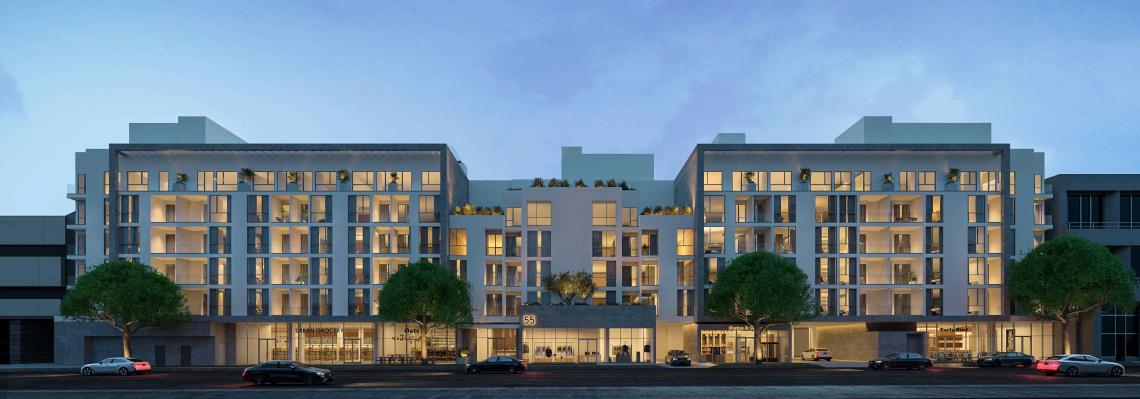
The project from Westland Development Group, which will rise just north of Wilshire Boulevard at 55 N. La Cienega Boulevard, calls for the construction of a six-story building that will feature 140 residential units above approximately 13,000 square feet of ground-floor commercial space and a three-level, 177-car subterranean parking garage.
 View looking west from La Cienega Boulevard, eveningKevin Tsai Architecture
Project entitlements include density bonus incentives to permit a larger building than would have otherwise been allowed at this location. In exchange, Westland will be required to set aside 22 apartments for very low- and moderate-income households.
“Securing financing for a project of this scale and complexity in Beverly Hills reflects not only the strength and vision of the sponsorship team, but also lender confidence in the long-term fundamentals of the market,” said Sharone Sabar of Marcus & Millichap Capital. “This development has been years in the making and will deliver much-needed housing, vibrant retail offerings, and an exceptional living experience in one of the most prestigious residential markets in the country. Upon completion, it is expected to be the largest residential complex in Beverly Hills’ history, creating a transformative addition to the city’s landscape.”
The four-year construction loan is structured at 65 percent loan-to-cost, per a news release.
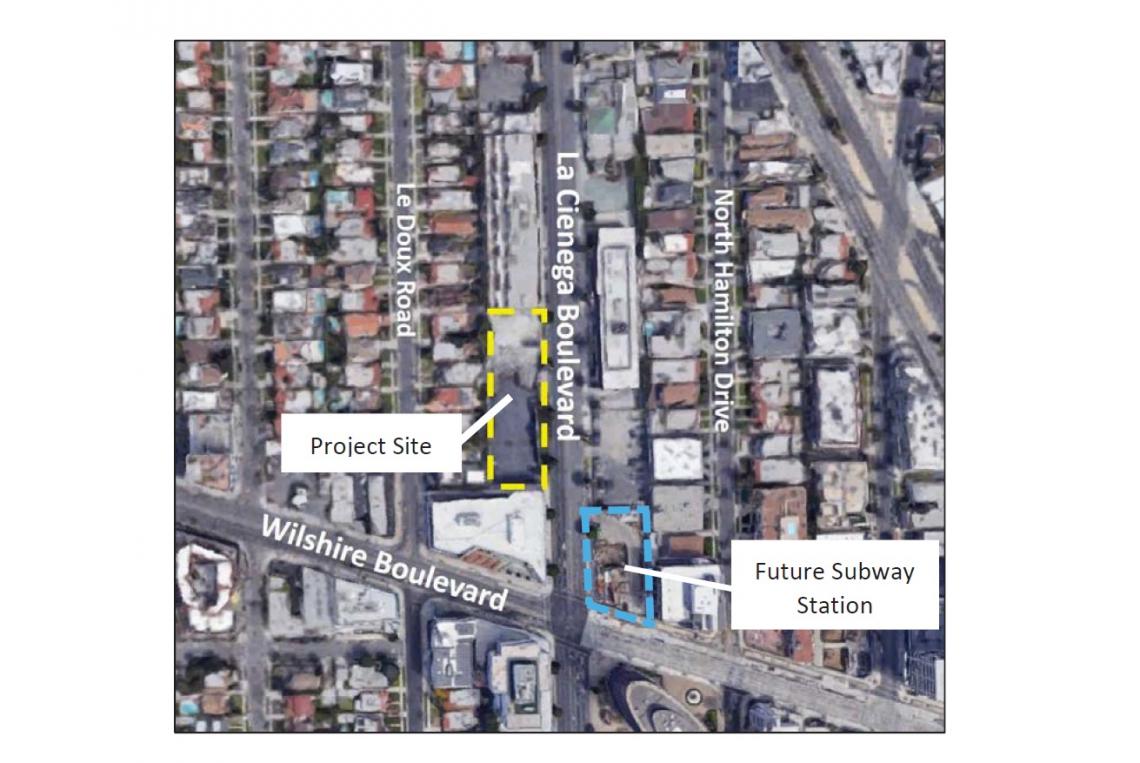 55 N. La Cienega Boulevard and future site of the Wilshire/La Cienega subway stationCity of Beverly Hills
Kevin Tsai Architecture is designing the contemporary housing complex, which will include a rooftop deck, fitness rooms, and a swimming pool.
The story of the project, which is located just northwest of the recently-opened Wilshire/La Cienega subway station, represents changes to local and state land uses regulations. Westland, which acquired the site in 2014, had previously been stymied in an effort to build a hotel on the property, and pivoted to a residential-retail complex utilizing new regulations adopted by the City of Beverly Hills which permitted housing uses on some commercial corridors. Initially improved as a 105-unit apartment complex, the project was revised to its current form utilizing the provisions of AB 1287, which grants a more generous density bonus to projects that include moderate-income housing in addition to a lower-income set-aside.
Follow us on social media:
Twitter / Facebook / LinkedIn / Threads / Instagram / Bluesky
- 55 N. La Cienega Boulevard (Urbanize LA)